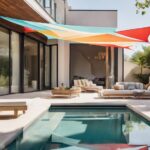

There’s more to a good outdoor area than putting a roof over your head.
An outdoor roof can look spot-on and still be wrong for the space. If the area gets too hot, loses its breeze or sends more water towards gutters that can’t handle it, you’ve fixed one problem and picked up a few more. You don’t want to end up looking at a gutter replacement that wasn’t on the cards. Good roof design comes down to how the area works once you’re underneath it.
If you’re building in Darwin or other hot, humid parts of northern Australia, plenty of shade and good airflow can make a big difference to how comfortable the outdoor area feels. Head south to Melbourne or Hobart, and you also need to think about how much useful winter sun the roof could block.
Outdoor Roof Design Is About Getting the Trade-Offs Right
It’s pretty easy for an outdoor area to feel good when the weather is mild and the sun is in the right spot. The better test is what happens when the afternoon sun drops lower, the temperature climbs, the breeze changes direction or a decent downpour hits the roof.
Most outdoor roof choices come with a trade-off. Think about what you gain on one side and what could change on the other:
- More roof coverage / Less winter sun and natural light
- More enclosure / Less airflow through the outdoor area
- More roof area / More rainwater to collect and drain
- More overhead shade / Low-angle sun can still reach the space
- More fixed weather protection / Less flexibility when conditions change
You don’t need an outdoor area that handles every weather condition perfectly. Think about how the space will perform on the hot, wet and windy days as well as the easy ones, and some of the common roof design mistakes become much easier to spot.
Before you lock in the size and layout, look at how the whole outdoor area needs to work, not just what the roof will look like from the backyard. A few choices that seem fine on paper can become pretty obvious mistakes once you’re using the space.
1. Copying a Roof Design That Doesn’t Suit Your Climate or Orientation
A roof that works well at a mate’s place isn’t automatically going to work at yours. Australia has eight main climate zones, and the job your outdoor roof needs to do changes quite a bit depending on where you are.
Take Darwin and other hot, humid parts of northern Australia. Keeping direct sun off the area and leaving room for cooling breezes are big priorities, so deeper shade can work in your favour. Around Melbourne or Hobart, you still want protection from summer sun, but blocking too much lower winter sun can work against you.
2. Adding More Roof Without Planning for the Extra Rainwater
Add a decent-sized patio or verandah roof and you’ve effectively added another rainwater catchment to the property.
According to the National Construction Code (NCC), roof catchment area is one of the factors used to work out the gutter capacity needed for a house. The NCC gives a good example of just how different those conditions can be: Mackay in Queensland has a 5-minute design rainfall intensity of 250 mm/h, compared with 139 mm/h in Albury, NSW, for the rainfall event used in eaves-gutter selection.
You can’t really look at the new outdoor roof in isolation from the drainage already on the property. If the new roof feeds into an existing gutter or downpipe, you’ve changed how much catchment that part of the system has to deal with.
If the existing gutters are already showing signs of wear or struggling to cope during heavy rain, the new roof is a good reason to review the whole drainage setup. In some cases, that could mean repairing sections of guttering or considering gutter replacement where the existing system is no longer suitable.
3. Covering the Wrong Parts of the Outdoor Area
You can have plenty of roof overhead and still find that the spots you use most aren’t properly covered. A few examples make the problem easier to spot:
- The dining table fits under the roof but the people sitting at the outer seats still cop the sun or rain.
- Most of the deck stays dry but he doorway between the house and deck is exposed.
- The entertaining area is covered but whoever is standing at the barbecue is out in the weather.
- The roof gives you plenty of midday shade but low morning or afternoon sun still reaches the seating area.
- You extend the roof for more protection but the adjoining living or dining room loses some of its natural light.
That last one is easy to overlook when you’re standing outside. Outdoor experts recommend sizing and positioning shading according to orientation because shading can affect summer heat gain and useful winter solar access.
4. Creating Plenty of Shade but Cutting Off the Breeze
You can be completely out of the sun and still feel hot sitting under an outdoor roof. Shade cuts direct solar heat, but it doesn’t keep air moving through the space. This is where passive cooling comes into the picture. Passive cooling uses the way a home is designed to reduce heat gain and help unwanted heat escape. Air movement plays a big part because cooling breezes can carry heat away while moving air also helps your body cool through evaporation.
You can see this approach in homes around Darwin, where shade and airflow need to work together. Layouts that capture cooling breezes and keep airflow paths open, while its Darwin River case study uses a roof and eaves to shade the outdoor living area alongside a layout specifically planned for cross-ventilation.
5. Leaving Blinds, Screens and Other Add-Ons Until Later
It’s easy to focus on getting the roof up first and tell yourself you’ll sort out the extras later. The problem is that some of those add-ons need space, power, support or a sensible mounting position. Think about what you could eventually want around or underneath the roof:
- Outdoor blinds → block low-angle sun, wind and some wind-driven rain when you need more protection from the sides.
- Privacy screens → give you separation from neighbours or exposed parts of the yard without completely closing in the outdoor area.
- Outdoor heaters → provide targeted warmth when you want to use the space during cooler weather.
- Power points → give you somewhere practical to run appliances, entertainment equipment or other outdoor electrical gear.
Once the posts, beams and roof are already in place, your options can become a lot more limited. You don’t necessarily need all of these. But leaving those decisions until everything else is built can make a fairly simple idea harder to fit into the finished space.
Make the Roof Work for the Space
There’s more to a good outdoor area than putting a roof over your head. The roof has to work with the sun, rain, airflow and the way you’ll use the space underneath it. A roof can look spot-on and still get some of those basics wrong. If there’s one thing to take away, it’s this: don’t judge an outdoor roof by how it looks from the backyard. Judge it by how well the space works once you’re under it.