
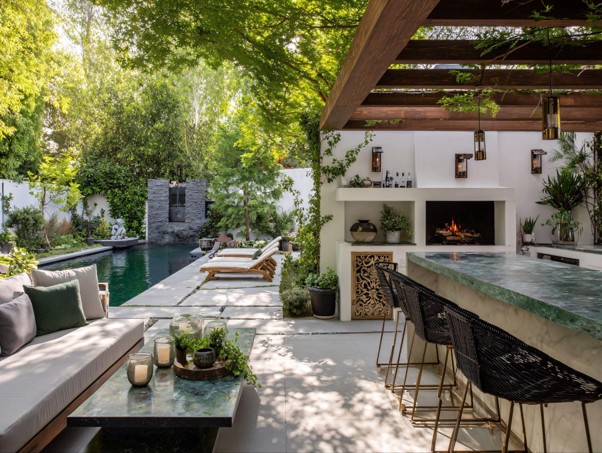
It’s always around springtime when we start thinking about our outdoor areas. With the sun shining longer each day and warmer temperatures, it’s nice to be able to eat dinner outside. However, just because you want to enjoy being outside doesn’t mean your outdoor space is enjoyable to be in.
Harsh sun in the afternoon, rain that may or may not come, uncomfortable furniture and lack of circulation are all factors that can keep you from wanting to enjoy your outdoor space. From simply placing furniture in the right spots to lighting, all can play a big factor.
Creating a comfortable outdoor living area means thinking about more than how it looks. The materials you choose, the amount of shade and shelter you have, how air moves through the space and even where you put your furniture can all affect whether you actually want to spend time there.
Here are six ways you can make your outdoor space more comfortable this spring.
1. Protect Your Outdoor Furniture From Changing Weather
If you have furniture on your pergola, it’s always nice to have some type of outdoor furniture covers for them when they’re not being used. Spring weather can be rough on your cushions and upholstery. Whether it’s rain, high winds or just normal spring elements, they can damage your furniture and finish if left outside for an extended period of time.
You want to find furniture covers that are sturdy and will last. You’ll want to also keep in mind how easy they are to use when needed and store when not in use. Another thing to keep in mind is the size of the furniture covers you buy. If your covers are too big, they won’t protect your furniture as well as tighter-fitting covers.
Nobody wants to be hauling their furniture indoors and outdoors every time the weather shifts. Think of ways to allow your outdoor living space to work with the weather instead of against it.
2. Think About Shade Before the Weather Heats Up
During the spring, you should start thinking about how much sun your outdoor living area gets. Depending on what time of day it is the sun will hit different areas of your garden. Your outside area could get plenty of sun during the afternoon or lunchtime but have nice shade in the mornings.
So think about when you will be using your space and where the sun will be. You can then plan if you would like all shade over your seating area or some over your dining area. Or maybe you want a combination of both.
Where the pergola is positioned and the way the roof is designed can affect how much direct sun will hit your outside area. There are ways to add more shade to certain areas, like installing shade sails. These are a great way to cover an area without having to cover your whole outside space. You could also look at shade options that allow you to cover different areas at different times of the day.
Rather than trying to block all sun out of your outside area, think about how much you want covered. Allowing some light through can make your outside space seem brighter. You may want more shade over your seating area, dining area or areas that get sun in the afternoon. Once you know what you want to achieve when designing your outside area, you can start to add these features.
3. Plan for Airflow as Well as Shelter
It’s nice to have shelter from the sun and rain, but your outside living space should still feel like the outdoors. Having some cross breeze can really benefit an area during the warmer months if you have multiple guests under your pergola. Don’t think that adding more screens will always create a cozier environment. There are certain directions that winds blow through your property, so keep that in mind when designing how much coverage you want.
You can assess this by looking at which way the space faces and where the breezes may travel from. Other structures, such as homes or even trees, can block cross breezes and create stagnant areas. A pergola with no walls can allow enough circulation while still giving you a designated space to spend time in. This is a great idea if you know you want cross-breeze.
You can screen off certain areas to add privacy or block harsh winds. You can also use outdoor curtains or screens in certain areas to help accomplish this. When considering pergola ideas, think about how your pergola will allow air to flow through the space. This can create a comfortable spot to sit when it’s windy but allow for an airy feel during warmer temperatures.
4. Choose Materials That Can Handle Outdoor Living
There are many factors to consider when decorating an outdoor space. From sun to rain and moisture, your furniture, flooring and soft furnishings can be affected. Choosing suitable materials will help your space look its best and require less upkeep.
When considering what materials to use, think about what will work best in that particular area. Your flooring may need to have a non-slip surface and be able to handle the amount of traffic that will pass through that space. Outdoor furniture will be exposed to the weather more often. Many fabrics and cushions now can withstand water and sunlight if they’re placed outdoors for a long time.
Choosing durable materials doesn’t always mean going for the most expensive. It could mean choosing something that can be repaired or will last you longer. Sustainable outdoor furniture is also another thing to consider if you want to go for something that is durable and kind on the planet. By using the right materials, you will find that your space will be easier to look after.
5. Make Lighting Part of the Design
Your outdoor space doesn’t have to become unusable at night. It can get dark fairly early in the spring months so having some lighting in mind when designing the space will allow you to enjoy it more once it’s dark outside. It’s best to think about where you want lighting before your final design is complete.
Depending on what you want to do under the pergola, there are different types of lighting you can use. You may want to light the dining area so you can see what you’re eating and have enough light to see the table. The lounge area can have some dim lighting that just allows you to sit and enjoy the evening. Make sure any steps or levels have lighting to ensure safety.
Having many smaller lights can create a more pleasant environment than one big bright light. You can use wall lights along with pendant lights and downlights. You can also have subtle lighting features that you can incorporate. If the lights are visible from your house windows, consider their aesthetic appeal. This can give you an extra living space outside that you can enjoy after sunset.
6. Design the Space Around How You Actually Use It
Think about what you want to do in your outdoor space. Don’t add extra items if they don’t serve a purpose. Will you be having dinner outside? Maybe just want a place to sit and drink a coffee. You could also want an area that is able to do all these things and more. Once you know what you want to achieve, you can then look at sizing, what furniture to buy and how much shade you require.
Another thing to consider is how many people will use the space. If you only have a small dining table, it may suit you, but not if you plan to have people over. A piece of furniture that’s too big can take up too much room. Make sure you leave adequate space between chairs, tables and any other items in the space. Especially when walking through the space or near doorways.
Lastly, what are you going to do when you’re not using the space? You could add storage to hold cushions and other outdoor items. This can allow you to not have to bring everything into the house. Outdoor spaces that work well for their users are those that suit their needs. Once you decide what you want your space to be, you will find yourself using it more often.
A More Comfortable Way to Enjoy the Outdoors
When creating an outdoor space, there are many factors that can help make the space more enjoyable. Shade, airflow, materials and even lighting will all play a role in how you use your outdoor space. Taking the time to consider these things when planning out your space will help ensure that you have a comfortable space year-round.
When you put proper thought into your outdoor design, you’ll end up with an inviting spot perfect for spending time in during spring and summer.