Building a pergola, verandah, deck or alfresco in Melbourne is the hard part however it is only half the job. Too many outdoor projects look finished in the photos and then sit empty once the builders leave. The missing piece is furniture that fits the structure, matches the house, and suits the way you actually live outside.
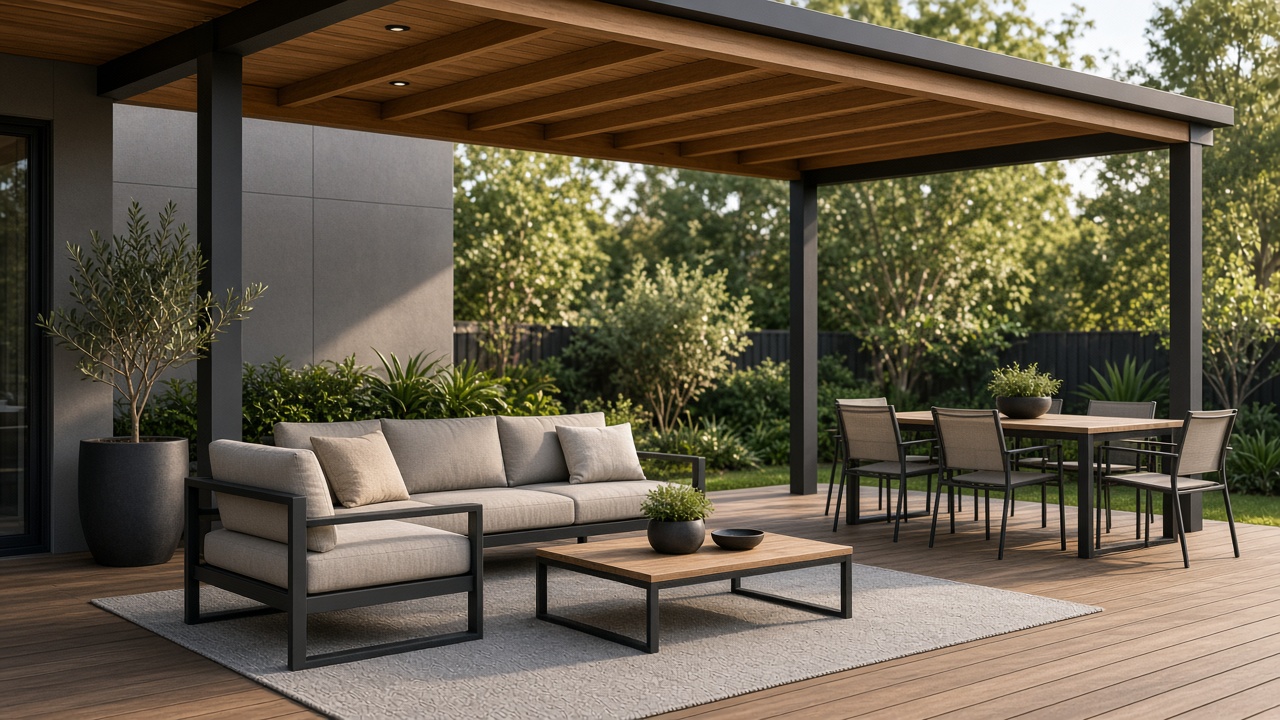
A contemporary alfresco works best when it feels like another living room, not a leftover patio with a mismatched setting dumped in the middle. Clean lines, warm neutrals, natural materials and the right scale turn a timber frame and a roof into a space people use every week — not only on Christmas Day.
Start With the Structure, Not the Sofa
Furniture decisions should follow the build, not fight it. Roof cover, post positions, deck size and how the space opens to the house all decide what will fit comfortably.
A narrow verandah might only take a slim dining table and bench along one wall — browse verandah ideas for covered layouts that already work as outdoor rooms. A deeper alfresco can hold a lounge zone and a dining zone without people bumping into posts every time they stand up. An open deck with little shade needs tougher materials than a lined verandah with downlights and a ceiling fan.
Before you buy anything, walk the finished (or planned) footprint and ask:
- Will this be mainly for dining, lounging, or both?
- How many people do you host most weekends — not once a year?
- Is the area fully covered, partly covered, or mostly open to weather?
- Where do people walk from the kitchen, BBQ and backyard?
Those answers matter more than any catalogue look. If you are still designing the structure, plan clearances now. Leave roughly 900mm behind dining chairs so they can pull out. Keep lounge seating out of main traffic paths. Allow room around posts so furniture does not feel wedged in. The best alfresco furniture plans are drawn while the pergola or verandah is still on paper.
Keep the house and the alfresco in the same language
Contemporary Australian interiors tend to favour simple shapes, soft neutrals, timber tones and layered textures that do not date quickly. Your outdoor space should pick up that same mood.
If the living room is pale linen, oak and black metal, an outdoor setting in loud plastic colours or heavy rustic pieces will feel disconnected the moment you open the sliding doors. Aim for:
- Neutral bases — charcoal, sand, stone, warm white or soft grey
- Natural accents — timber tabletops, woven textures, planting
- Simple silhouettes — straight legs, low profiles, modular lounge pieces
- Soft layers under cover — outdoor cushions, a weather-rated rug, simple outdoor lighting
The goal is continuity. Guests should feel they have stepped into another room of the same home, not into a different property.
If you are furnishing the inside of the home at the same time, it helps to treat indoor and outdoor as one design job. Contemporary whole-home packages — including outdoor living or dining as an add-on — can keep that palette consistent. One option for the indoor side is FurnishX’s contemporary furniture package, which are built around clean lines, warm neutrals and a cohesive layout across rooms. Use that (or a similar approach) to lock in the house style, then choose outdoor pieces that continue the same look under your pergola or verandah.
Furnish in Packages, Not Random Pieces
The easiest way to get a contemporary alfresco looking intentional is to buy in zones — the outdoor version of a furniture package — instead of collecting unrelated items over months.
Dining package
Table and chairs sized to the roofed area. For everyday use, a table for four to six is usually more practical than a huge setting that crowds the deck. Match chair style to the table: slim metal frames for a modern look, timber for warmth, or a mix if the house already mixes materials indoors.
Lounge package
A compact outdoor sofa or modular corner, a low coffee table, and (under cover) an outdoor rug. Keep the lounge where it gets afternoon shade and evening light. On smaller verandahs, two deep chairs and a small table often work better than a full sofa.
Styling extras
Planters, outdoor wall lights or pendants, a side table near the BBQ, and weather-resistant cushions. Keep styling light. Contemporary spaces look better with a few strong pieces than with clutter.
You do not need every zone. A family that eats outside three nights a week should prioritise dining. A household that prefers drinks and conversation should prioritise lounge. Trying to force both into a small footprint is how alfresco areas end up unused.
Choose Materials that Survive Melbourne Weather
Indoor furniture left outside will fail quickly. Even under a verandah, outdoor pieces need to handle UV, wind-blown rain and temperature swings.
Practical choices for contemporary alfresco areas include:
- Powder-coated aluminium — light, low maintenance, clean lines
- Quality teak or similar hardwoods — warm and durable when maintained
- Synthetic wicker on a metal frame — softer look, better outdoors than natural rattan
- Outdoor fabrics for cushions — fade and mould resistant
On fully exposed decks, lean harder into aluminium and tough synthetic materials. Under a lined or well-covered alfresco, you can introduce softer textiles and a more “indoor” lounge feel — still outdoor-rated, but closer to the contemporary living-room look.
Protect what you can: covers for long wet stretches, quick drainage under furniture legs, and regular cleaning so timber and fabrics last longer.
Design the Build So Furniture Works Harder
Furniture alone will not make people stay outside. Comfort features belonging in the structure make the difference between a pretty deck and a second living space.
When you plan or quote your pergola, verandah or alfresco, think about:
- Lighting for evening dining and safe steps
- A ceiling fan or heater for shoulder seasons
- Power points for lamps, speakers or a portable pizza oven
- A level threshold from the house so indoor–outdoor flow feels natural
- Space for a BBQ or outdoor kitchen without blocking furniture
These details are far cheaper to include during the build than to retrofit later. They also decide where furniture should sit. A heater over an empty corner is wasted; a lounge under that heater gets used.
Make it Useful, Not Just Photogenic
A contemporary alfresco earns its keep when it matches real habits. If you mainly need somewhere for kids’ meals and quick weeknight dinners, a tough dining set under cover beats a styled lounge you never sit on. If you entertain, leave clear standing room near the BBQ and a simple drinks table within reach of the kitchen door.
Scale matters as much as style. Oversized furniture in a modest verandah makes the space feel smaller. Tiny pieces on a large deck look lost. Measure the usable area inside posts and balustrades, then choose packages that leave breathing room — especially on Melbourne decks where balustrades and steps already eat into the footprint.
Finally, keep maintenance realistic. Contemporary design is meant to feel calm and effortless. Choose finishes and fabrics you will actually look after, and the alfresco will stay inviting year after year.
From Empty Frame to Outdoor Room
A well-built pergola, verandah, deck or alfresco gives you the bones of an outdoor room. Contemporary furniture — planned in zones, matched to the house, and sized to the structure — is what turns those bones into a place people naturally gather.
Start with how you will use the space. Keep the palette consistent with the home. Buy dining and lounge pieces as packages rather than leftovers. Choose materials built for Australian conditions. And design lighting, heating and access into the build so the furniture has somewhere comfortable to live.
Do that, and the new outdoor structure will not just look finished — it will get used.