When architects and designers work on luxury custom homes, the details matter as much as the overall form. A building can have flawless proportions and exceptional materials throughout, yet the wrong window treatment can undermine the entire facade.
This is why the specification of window shrouds has become a defining choice on high-end residential and commercial projects across Australia and why the material and fabrication method behind them deserve careful consideration.
What Is a Window Shroud?
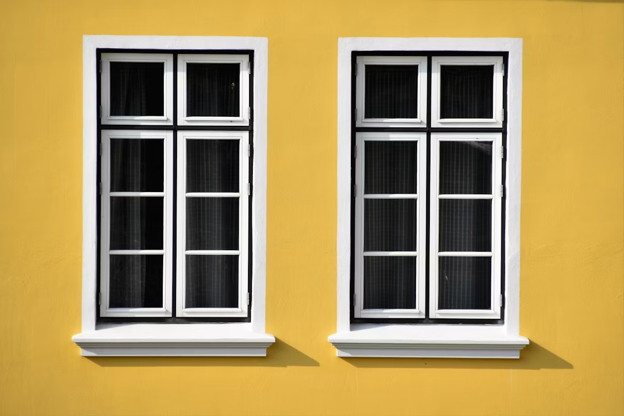
A window shroud is an architectural cladding element fitted around the exterior of a window opening. It creates a recessed or framed appearance that adds depth, shadow lines, and visual definition to the facade. On luxury homes, shrouds serve both an aesthetic and a functional purpose; they enhance the architectural language of the building while protecting the window frame and surrounding substrate from weather exposure.
Shrouds are specified across a wide range of contemporary residential styles, from minimalist coastal homes to urban infill projects where facade articulation is a primary design consideration. The right shroud disappears into the design intent. The wrong one becomes a maintenance problem within a few years.
Why Aluminium Is the Material of Choice
Timber shrouds have a long history in Australian residential construction, but their limitations in coastal and high-humidity environments are well documented. Timber moves with moisture, requires ongoing maintenance, and is susceptible to rot and insect damage when not properly protected. Steel is durable but heavy, prone to corrosion without appropriate surface treatment, and more difficult to fabricate into the clean profiles that contemporary architecture demands.
Aluminium resolves most of these challenges in a single material choice. It is lightweight, corrosion resistant, dimensionally stable, and responds well to powder coating, which means it can be colour-matched precisely to any facade palette. Aluminium window shrouds fabricated to the correct tolerances and finished with a quality powder coat system will hold its appearance for decades without the repainting cycles that timber demands.
For architects specifying coastal projects or strata developments where ongoing maintenance access is limited, this longevity is not a luxury; it is a practical requirement.
The Importance of Custom Fabrication
Off-the-shelf shroud profiles exist, but they rarely suit the requirements of a custom home. Window openings vary, reveal depths differ, and facade materials impose their own constraints on how a shroud must be detailed at its perimeter. Custom fabrication allows the shroud to be designed as an integral part of the facade system rather than an afterthought fitted around a standard product.
Custom aluminium fabrication also allows for variations in profile depth, return angles, and surface texture that give a project its distinctive character. A shallow, sharp-edged shroud reads very differently from a deeper, chamfered profile, and both can be executed cleanly in aluminium in ways that are difficult or expensive to achieve in other materials.
Architects working with experienced fabricators can develop shroud profiles that carry through an entire project, creating visual consistency across all facade openings without compromising on the dimensional accuracy that detailed joinery requires.
Powder Coat Quality and Long-Term Performance
The surface finish on an aluminium shroud is where long-term performance is won or lost. Not all powder coat systems are equal. Budget powder coat applied without proper pre-treatment can fade, chalk, or peel within a few years of UV exposure, particularly in Queensland and coastal New South Wales where UV intensity and salt air combine to accelerate coating degradation.
Specifying a warranty-grade powder coat system, applied over appropriate pre-treatment chemistry, is the difference between a facade element that holds its appearance for a decade and one that requires remediation work within five years. For a custom home where the cost of scaffolding alone makes recoating an expensive exercise, the upfront investment in a quality coating system is always justified.
When briefing fabricators, it is worth asking specifically about the pre-treatment process and whether the powder coat system carries a manufacturer warranty. These are not standard questions on a typical building project, but they are exactly the questions that distinguish a specifier who understands long-term performance from one who is focused only on upfront cost.
Coordinating Shrouds with the Broader Facade System
Window shrouds do not exist in isolation. On a well-resolved facade, they are part of a coordinated system that may include sun hoods, louvre screens, planter boxes, and other custom aluminium elements. Fabricating all of these elements through a single supplier has clear advantages, consistent material thickness, matched powder coat batches, and a single point of accountability for the performance of the entire facade system.
This coordination becomes particularly important on projects with complex geometries or multiple facade orientations, where the relationship between shroud depth, sun angle, and internal daylighting needs to be resolved during the design phase rather than on site.
What to Look for in a Fabricator
Not all aluminium fabricators have experience with architectural facade elements. The skills required to produce a clean, square shroud with consistent reveal depths across multiple window openings are different from the skills required to fabricate structural aluminium components or standard commercial joinery.
Architects and designers should look for fabricators who can demonstrate experience on comparable residential projects, who have in-house powder coating capability with a traceable quality system, and who can provide shop drawings for review before fabrication begins. The shop drawing stage is where dimensional conflicts between the shroud and the window frame, cladding system, and substrate are resolved, and skipping it is a reliable path to site problems.
Choosing the right fabricator early in the design process, rather than leaving the specification open for builder procurement, gives the design team the best chance of achieving the facade outcome the project deserves.