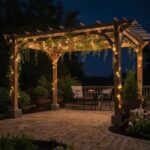

Thinking about adding a pergola to your backyard in South Australia? Before you start ordering timber or booking an Adelaide pergola builder, you need to know where you stand with council approval. The rules in SA are fairly clear once you break them down, but they’re not always intuitive.
This guide walks you through when you don’t need council approval, when you definitely do, how to apply, and what to watch out for so your pergola is legal, safe, and doesn’t turn into an expensive headache later on.
Do You Need Council Approval For A Pergola In South Australia?
In South Australia, you may not need council approval for a small, simple pergola, but anything larger or more complex will usually require formal development approval.
Under the Planning, Development and Infrastructure (PDI) Act and the SA Planning and Design Code, some minor domestic structures are classed as “exempt development”. If your pergola fits very specific size, height, and location limits, you can normally build without lodging an application.
If it doesn’t meet those criteria, even by a small margin, you must apply for approval through the PlanSA portal and obtain:
- Planning consent, and
- Building rules consent (often via council or a private certifier).
The key is to assess your design against the exemption rules before you commit to materials or a builder. You can’t “fix” an unapproved pergola easily once it’s built.
Key Rules And Definitions You Must Understand
Before you look at exemptions, it helps to understand how pergolas are treated under South Australian planning rules.
What counts as a pergola?
In SA, a pergola is generally:
- An open-framed structure
- Usually with posts and beams
- Often with battens or slats on top
- No solid, fully weatherproof roof
- Not enclosed by solid walls.
If you add a solid roof, it usually stops being a pergola in planning terms and starts being treated as a verandah or roofed outdoor area, which almost always requires approval.
Associated with a dwelling
To qualify under the common exemptions, your pergola must be “associated with a dwelling”, meaning it’s clearly related to your home’s use, such as:
- Outdoor entertaining
- Shade over a patio
- A structure adjoining or close to your house.
A large free-standing structure out in a paddock or on a separate title may be assessed differently.
Building line and front setback
Many exemptions apply only behind the front building line of your house. In other words, an exempt pergola generally can’t be in front of your home facing the street.
If you’re unsure where your building line is, use:
- Your approved house plans (if you still have them)
- Your survey plan, or
- A quick check with council’s planning team.
Overlays and special zones
Even if a pergola looks minor, you may lose exemption status if your property is affected by certain planning overlays, for example:
- Local heritage or State heritage listing
- Character or historic zones
- Flood-prone or bushfire risk areas
In those cases, you’re often required to seek planning consent regardless of size, so it’s worth checking your property details on the PlanSA map viewer or with your local council.
When A Pergola Is Exempt From Development Approval
You can usually build a pergola in South Australia without council approval if it meets all of the typical exemption criteria for minor domestic structures. While details can change over time and you should always double-check, the general pattern is:
A pergola is typically exempt if:
- It’s for a single dwelling (a normal house, not a unit complex or commercial site), and
- It’s not in front of the house (i.e. behind the front building line), and
- It’s open-roofed and not enclosed (no solid ceiling, no solid walls), and
- The total floor area is small (often up to around 20m² – think roughly 4m × 5m as a guide), and
- The maximum height is limited (commonly around 3m above natural ground level), and
- It’s set back from boundaries (often at least 900mm clear of side and rear boundaries), and
- Your property is not heritage-listed or in a sensitive overlay that removes the exemption.
If your pergola ticks all of those boxes, it’s very likely to fall into the “exempt development” category, meaning you don’t need to lodge an application.
But, two important cautions:
- Local conditions and updated rules apply – always check the latest guidance on the PlanSA website or call your council’s planning team.
- Builders aren’t the authority – some will tell you “you don’t need approval” based on experience, but only council / PlanSA can give you a definitive answer.
If you’re even slightly over on size or height, or closer to a boundary than allowed, you move out of the exempt category and into development approval territory.
When You Must Apply For Council Approval
You must seek development approval for your pergola in South Australia if any of the key exemption conditions aren’t met. In practice, you’ll need approval if:
- The floor area is larger than the exempt limit (e.g. a big 30–40m² entertaining area)
- Any part is higher than the allowable height (common issue on sloping blocks)
- It’s built closer to the boundary than the setback allowed
- It’s in front of the dwelling or highly visible from the street
- It has a solid or mostly solid roof (e.g. Colorbond, polycarbonate sheeting covering most of the top)
- You add screening, blinds, or solid walls that effectively enclose it
- Your property is heritage-listed or sits within a special character area
- The pergola is part of a larger development (e.g. extensions, decks, or pool enclosures at the same time).
In these situations, you’re dealing with a formal development application. That usually involves:
- Planning consent – assessing the pergola’s impact on streetscape, neighbours, zoning, and overlays
- Building rules consent – checking structural safety, footings, wind loads, and compliance with the National Construction Code.
You can’t rely on “it’s just a pergola” as a defence if council later investigates: in the eyes of the legislation, it’s still development once it exceeds the exempt limits.
How To Apply For Pergola Approval In South Australia
The approval process for a pergola in South Australia is now largely handled online through PlanSA. Here’s how to work through it step by step.
1. Confirm whether approval is needed
Before you spend money on plans:
- Check the exempt development guidance on PlanSA
- Phone or email your local council planning department with basic details: site address, size, height, location, and whether it’s roofed.
Ask explicitly: “Will this require a development application?” and keep a note of the advice you receive.
2. Prepare your documentation
For a typical application you’ll need:
- Site plan showing:
- Property boundaries
- Location of house and other structures
- Exact position of the pergola, with distances to boundaries
- Elevations (side views) with:
- Heights from natural ground level
- Materials (posts, beams, roofing if any)
- Structural details, usually including:
- Footing sizes and depths
- Post and beam sizes and spans
- Connections and fixings
- Manufacturer’s details if using a proprietary pergola system or kit
- Any engineering certification required for larger or more complex designs.
If you engage a licensed builder or pergola company, they’ll often prepare most of these documents for you.
3. Lodge via the PlanSA portal
You submit your application online:
- Go to the PlanSA portal
- Create or log in to your account
- Start a new development application
- Upload your plans and documents
- Pay the required application fees.
Your application is then allocated to the relevant authority, usually your local council, for assessment.
4. Assessment and requests for information
During assessment, the planner or building officer may:
- Ask for clarification or extra details (e.g. accurate boundary setback dimensions)
- Recommend minor changes to meet setbacks or building rules
- In some cases, notify adjoining neighbours if the proposal has potential impact.
Respond quickly and clearly to any requests: delays in your replies almost always mean delays in approval.
5. Receive consent and conditions
Once approved, you’ll receive:
- A planning consent notice
- A building rules consent or full development approval (depending on how your council packages it)
- Any conditions of consent, such as:
- Drainage requirements
- Materials or colour restrictions in character areas
- Time limits to start and complete the work.
Read these conditions carefully. You’re legally obliged to comply with them during construction.
Common Issues, Delays, And How To Avoid Them
Pergola applications are usually straightforward, but a few recurring problems slow things down or lead to refusals.
1. Boundary setbacks and overlooking
Issue: Pergola too close to the boundary or creating privacy issues for neighbours when combined with a deck.
How to avoid it:
- Mark out the pergola on site with tape and stakes
- Measure setbacks carefully from the title plan, not just a fence (fences are often in the wrong spot)
- If you’re elevated on a deck, consider privacy screens designed to meet the Code.
2. Confusion between pergola and verandah
Issue: You design a “pergola” but add a near-solid roof or blinds, and council treats it as a verandah or enclosed outdoor room.
How to avoid it:
- Decide upfront: is it truly open, or do you want full weather protection?
- If it’s going to end up roofed and enclosed, design and apply for it as such from the start.
3. Incomplete or inconsistent plans
Issue: Dimensions don’t match between plans, heights are missing, or structural details are vague.
How to avoid it:
- Double-check all drawings before submission
- Ensure heights, spans, and materials are clearly labelled
- Use a draftsperson or designer if you’re not comfortable drawing to scale.
4. Heritage and character controls
Issue: Properties in heritage or character areas often face stricter rules about visible structures, colours, and materials.
How to avoid it:
- Check if your property is heritage-listed or in a character area via PlanSA
- Have an early chat with the council heritage adviser
- Choose materials and colours that complement the existing house.
5. Building before approval
Issue: You or your builder start work assuming “it’ll be fine” and council later discovers the unapproved pergola.
How to avoid it:
- Don’t pour footings or erect posts until written approval is in your hands
- Make this a condition in your builder’s contract.
If council does investigate, you may be forced into a retrospective application, required to modify the structure, or in worst cases remove it entirely.
Costs, Timeframes, And Practical Planning Tips
Likely approval costs
The total cost for pergola approval in South Australia varies with size and complexity, but typical components include:
- Lodgement and administration fees – often from around $100–$250
- Planning assessment fees – scaled to project cost, commonly a few hundred dollars for small domestic work
- Building rules assessment / certification – $200–$600+ depending on complexity
- Engineering certification (if needed) – $300–$800+ for custom steel or large spans.
As a rough ballpark, it’s common for a straightforward domestic pergola application to cost somewhere between $400 and $1,200 in approvals and associated professional fees, on top of the actual build cost.
How long does approval take?
Timeframes depend on workload and complexity, but for a standard pergola you might expect:
- Validation of your application: 1–2 weeks
- Planning assessment: 2–4 weeks (longer if public notification is required)
- Building rules consent: 1–3 weeks, especially if engineering is involved.
Realistically, plan for around 4–8 weeks from lodgement to final approval, assuming you respond promptly to any requests for information.
Smart planning tips
To keep your project moving smoothly:
- Design within obvious limits – if you’re close to exemption thresholds for height or area, either:
- Adjust the design to clearly comply, or
- Accept you’ll need full approval and design properly from the outset.
- Stage your backyard upgrades – if you’re also adding a deck, pool, or extension, consider whether it’s more efficient to combine them in a single application.
- Talk to your neighbours early – especially if your pergola is near boundaries or elevated. Friendly discussion upfront can head off objections later.
- Keep records – save copies of your approved plans, consent letters, and conditions. You’ll need them if you sell or refinance.
Spending a bit more time on planning usually saves money and stress during construction.